
How Boutique Wedding Photography Combines Candid and Posed Moments
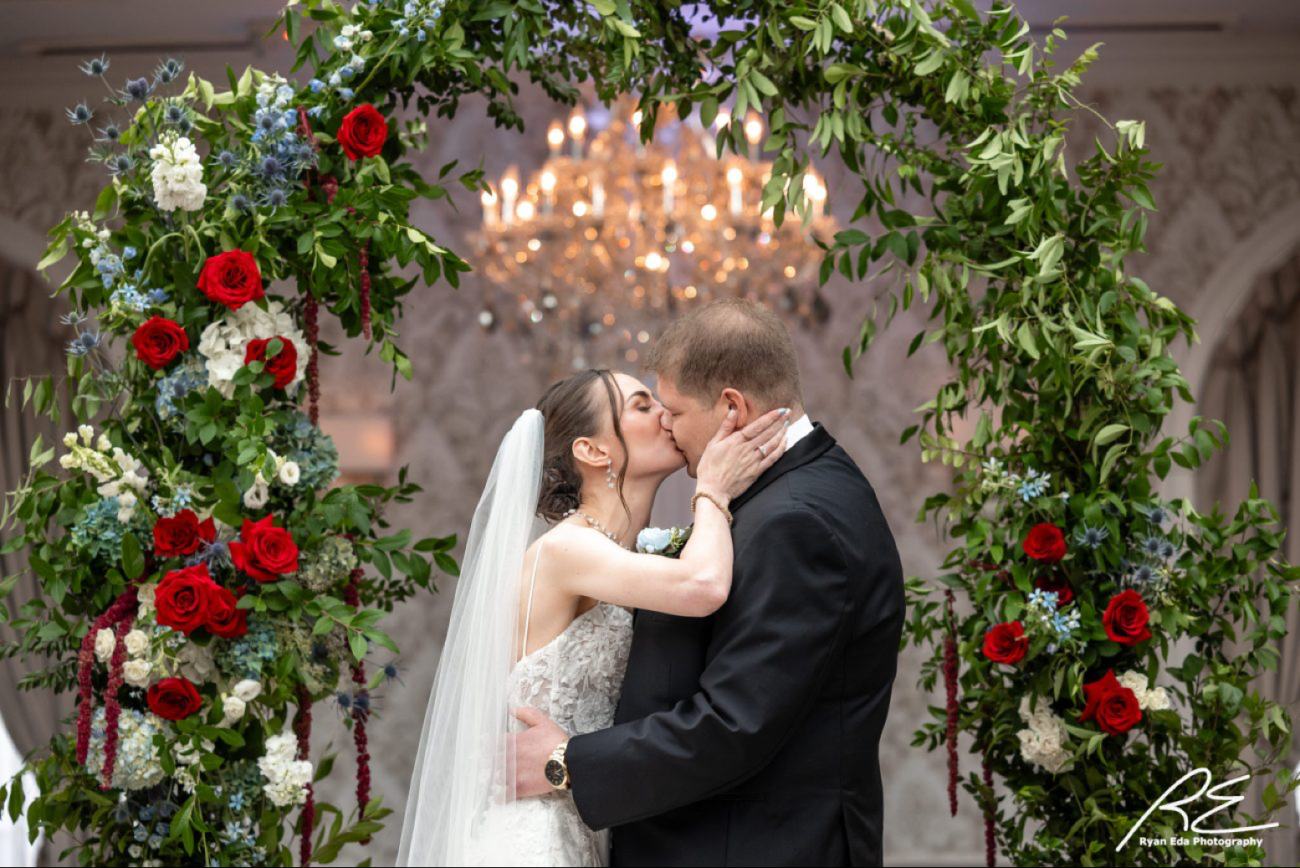
Colleen and AJ at The Merion. Photo: Ryan Eda Photography
You don’t have to choose between candid and posed wedding photography. The best wedding galleries use both: real moments captured as they happen, plus a few beautifully guided portraits that you’ll frame for decades.
Many couples want natural photos but still want a classic portrait with their grandparents. That’s normal. A boutique approach plans for both, so the day feels relaxed, and nothing important is missed. Here’s how candid and posed wedding photography work together at every part of your day, and how we balance them at Ryan Eda Photography.
Key takeaways
- Candid photos capture real emotion. Posed photos make sure the important people and portraits are covered.
- Gentle direction turns “posed” into natural: simple movements, good light, and real interaction.
- Each part of the day leans one way: the ceremony and reception are mostly candid, while family and couple portraits are guided.
- Talk about the balance, your family list, and your timeline at your consultation.
What Is the Difference Between Candid and Posed Wedding Photography?
Candid wedding photography captures unscripted moments as they happen. Posed wedding photography is guided: the photographer chooses the light, setting, and arrangement. Most couples need both to tell the full story of their day.
| Candid | Posed | |
| How it’s made | The photographer watches and anticipates | The photographer guides you |
| What it captures | Real reactions, laughter, tears | Couple portraits, family and wedding-party photos |
| When it shines | Getting ready, ceremony, toasts, dancing | Portrait time, family formals, first look |
| How it feels | Natural and in the moment | Polished, with intentional light and composition |
Understanding Candid Wedding Photography
Candid wedding photos are unposed moments of real emotion. Think of laughter while you get ready, your partner’s face during the vows, or friends cheering on the dance floor. Candid coverage is also called photojournalistic or documentary wedding photography.
The skill is in anticipation. A good photographer knows where the emotion will be, such as a parent’s face during the vows or the guests during the toasts, and is already in position. At Ryan Eda Photography, we focus on people having fun and capture your wedding as it happens: real moments, real emotion.
Understanding Posed Wedding Photography
Posed wedding photos are guided portraits with intentional composition: romantic couple portraits, wedding-party photos, and traditional family groupings. Your parents, grandparents, and elders will treasure these, and they become part of your family history.
Professional posing guidance is what makes them feel comfortable. As our FAQ puts it, we will not leave you clueless. We place you in great light and guide you with some direction and styling when needed.
Why Couples Benefit From Combining Both Photography Styles
Combining candid and posed photography gives you a complete visual story: honest emotion alongside polished portraits. Choosing only one style usually leaves a gap.
With only candid photos, you might miss the one clean portrait with both families together. With only posed photos, the gallery can feel stiff and miss what the day actually felt like. A blend gives you variety for every use:
- Wedding albums that move from big moments to quiet details
- Prints and wall art from your favorite guided portraits
- Family memories, like a classic group photo for your grandparents and a candid laugh between cousins
That’s why our style is a mix of traditional, lifestyle, and photojournalistic photography, with cinematic, editorial-style portraits in between.
How Boutique Wedding Photographers Balance Candid and Posed Moments
A boutique photographer plans the balance around your day. The candid moments get room to happen, and the guided portraits get a clear time and place. Here’s how that plays out through the wedding.
Getting-Ready Photography
Getting ready is mostly candid, with a few guided portraits and detail photos. Nerves, laughter, and last-minute help make some of the most honest images of the day.
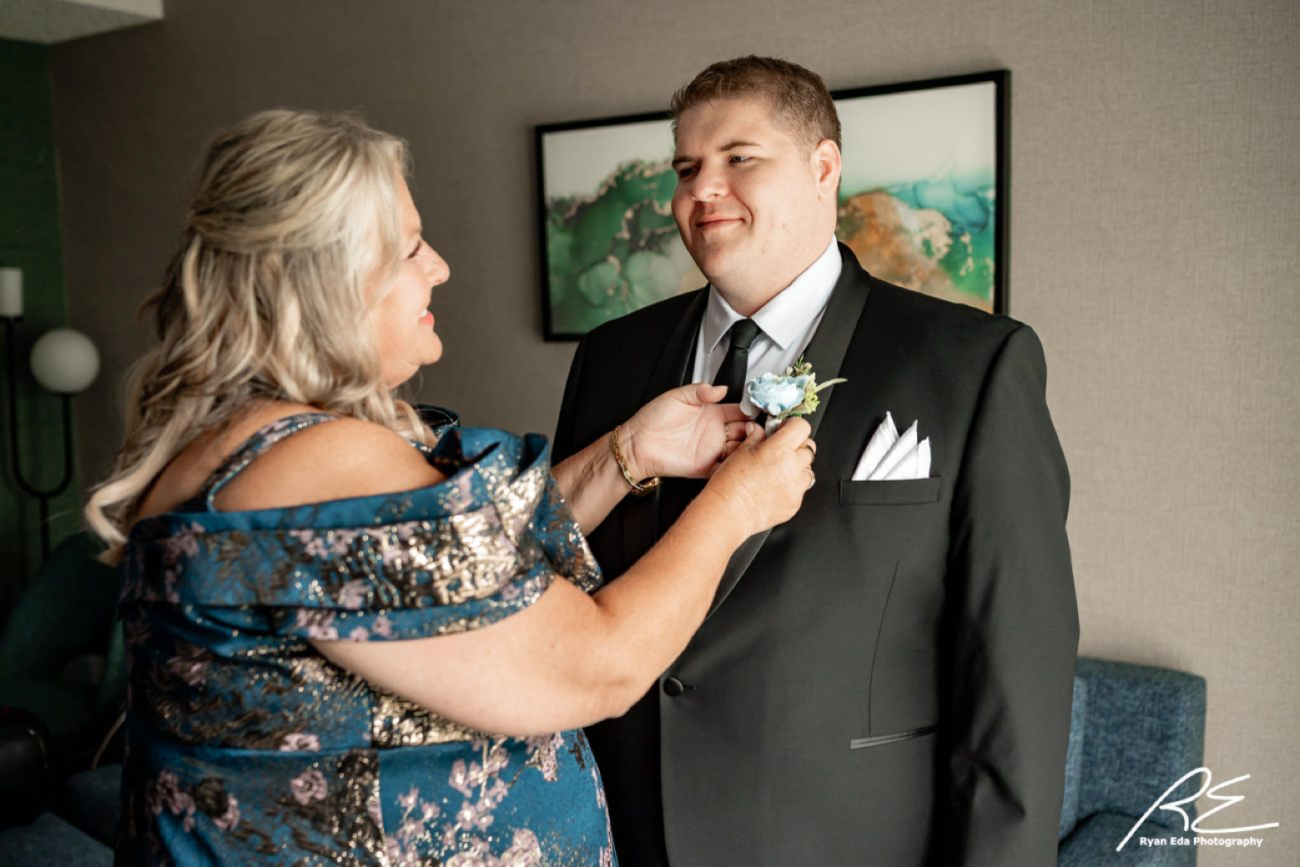
A real getting-ready moment before Colleen and AJ’s wedding. Photo: Ryan Eda Photography
We also make time for a few individual portraits by a window or in the best light in the room. Detail photos capture the shoes, jewelry, and keepsakes you chose with care.
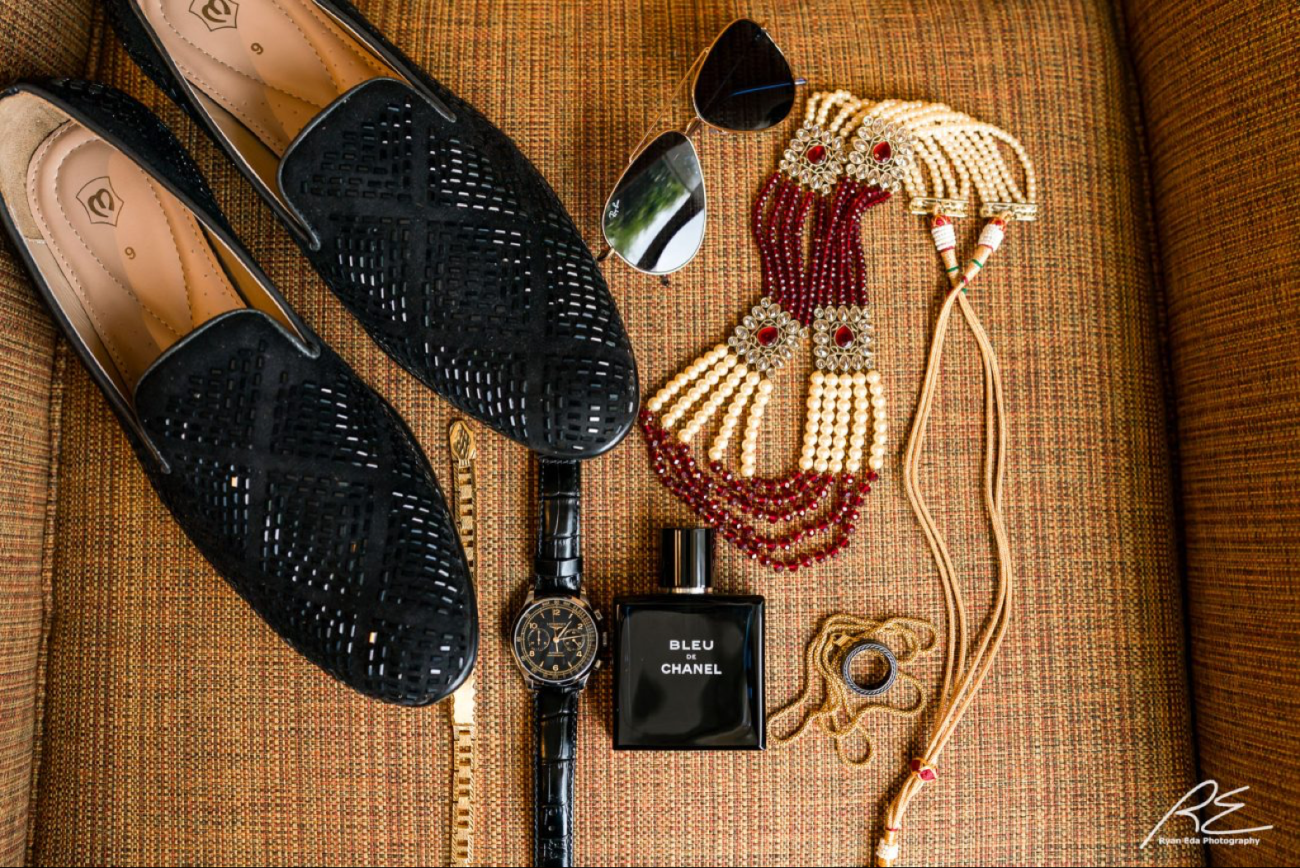
Getting-ready details at Hotel du Pont in Wilmington, DE. Photo: Ryan Eda Photography
Ceremony Photography
The ceremony is almost entirely candid. Your photographer stays unobtrusive and documents the important moments: the walk down the aisle, the vows, the rings, and the first kiss.
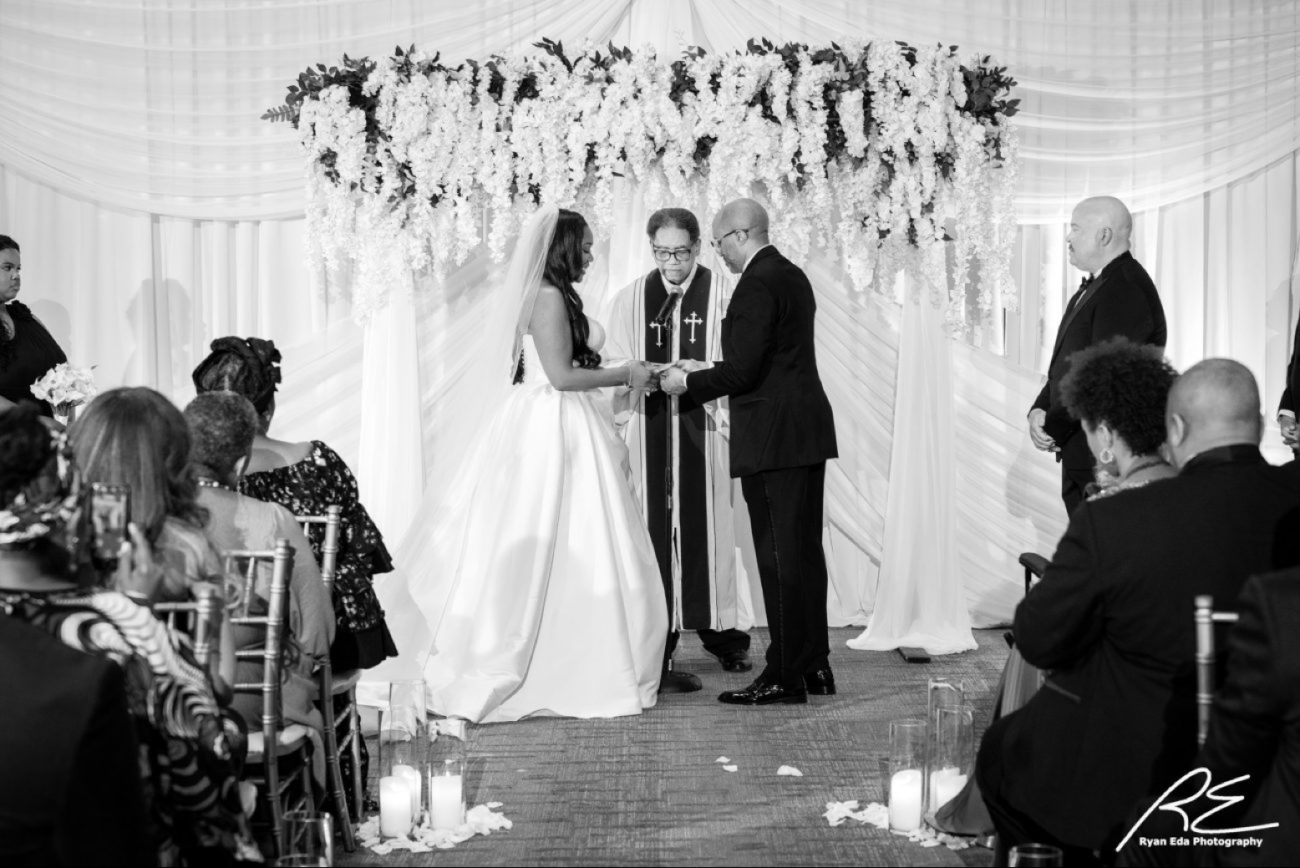
The ring exchange at a Union Trust wedding ceremony. Photo: Ryan Eda Photography
Some of the most emotional ceremony moments happen before the ceremony itself. At Emily and John’s wedding at The Merion, the couple shared a first touch and read private vows to each other before walking down the aisle.
Couple and Family Portraits
Portraits are where guided photography does its job, but it shouldn’t turn your wedding into a long photoshoot. The goal is relaxed couples, organized families, and plenty of time left to enjoy your guests.
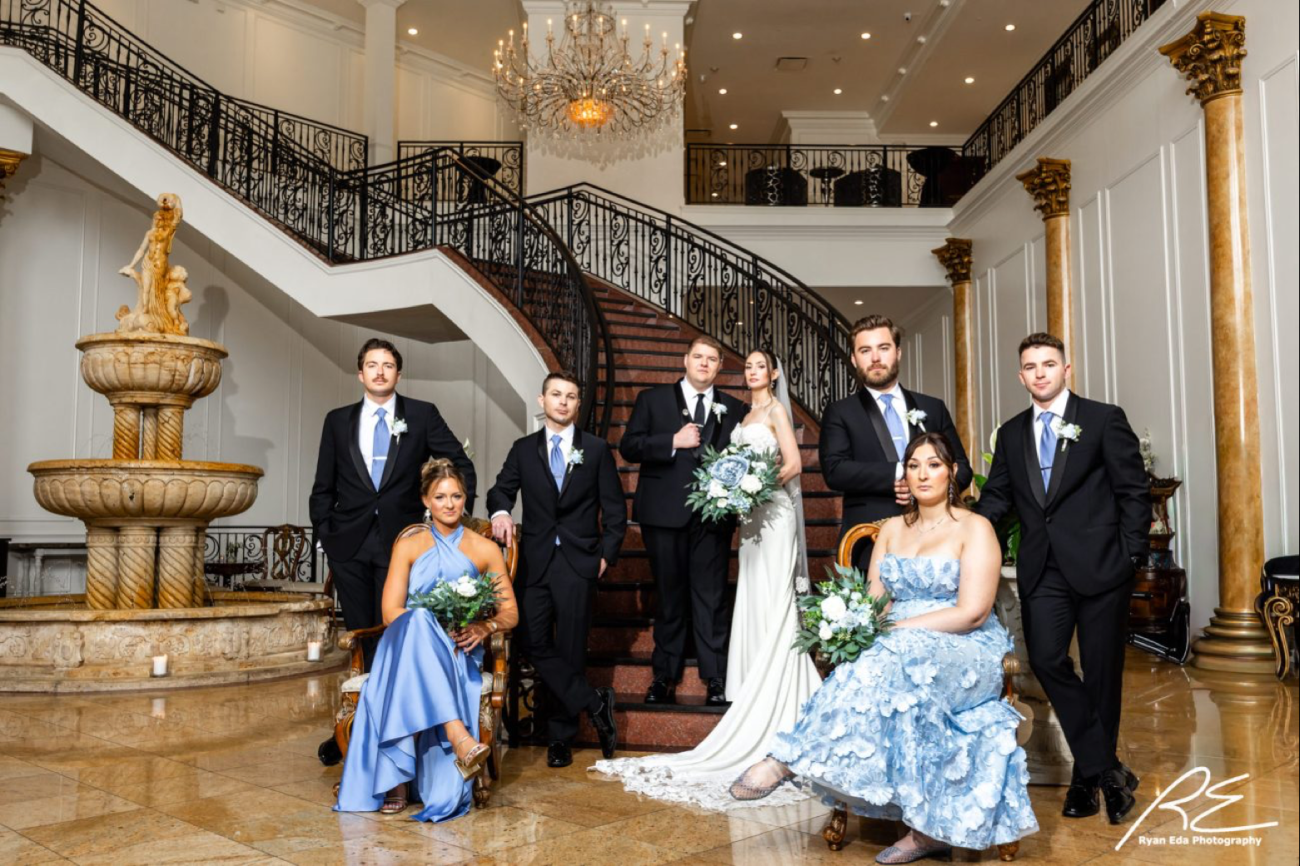
A guided wedding-party portrait on The Merion’s staircase. Photo: Ryan Eda Photography
Planning keeps it efficient. In our guide to how many hours of wedding photography you need, we explain that family and wedding-party portraits take about 45 to 60 minutes, depending on the size of your family and bridal party. Couple portraits need about 20 to 30 minutes, ideally around golden hour just before sunset.
A first look can help. It lets you finish couple, wedding-party, and family portraits before the ceremony, so you can actually attend your own cocktail hour. In winter, the sun is usually gone by about 4 p.m., which makes a first look even more useful.
Reception Photography
The reception is mostly candid again: speeches, laughter, dancing and celebration. Good reception coverage mixes wide scenes of the room, close-ups of emotion and details of the décor.
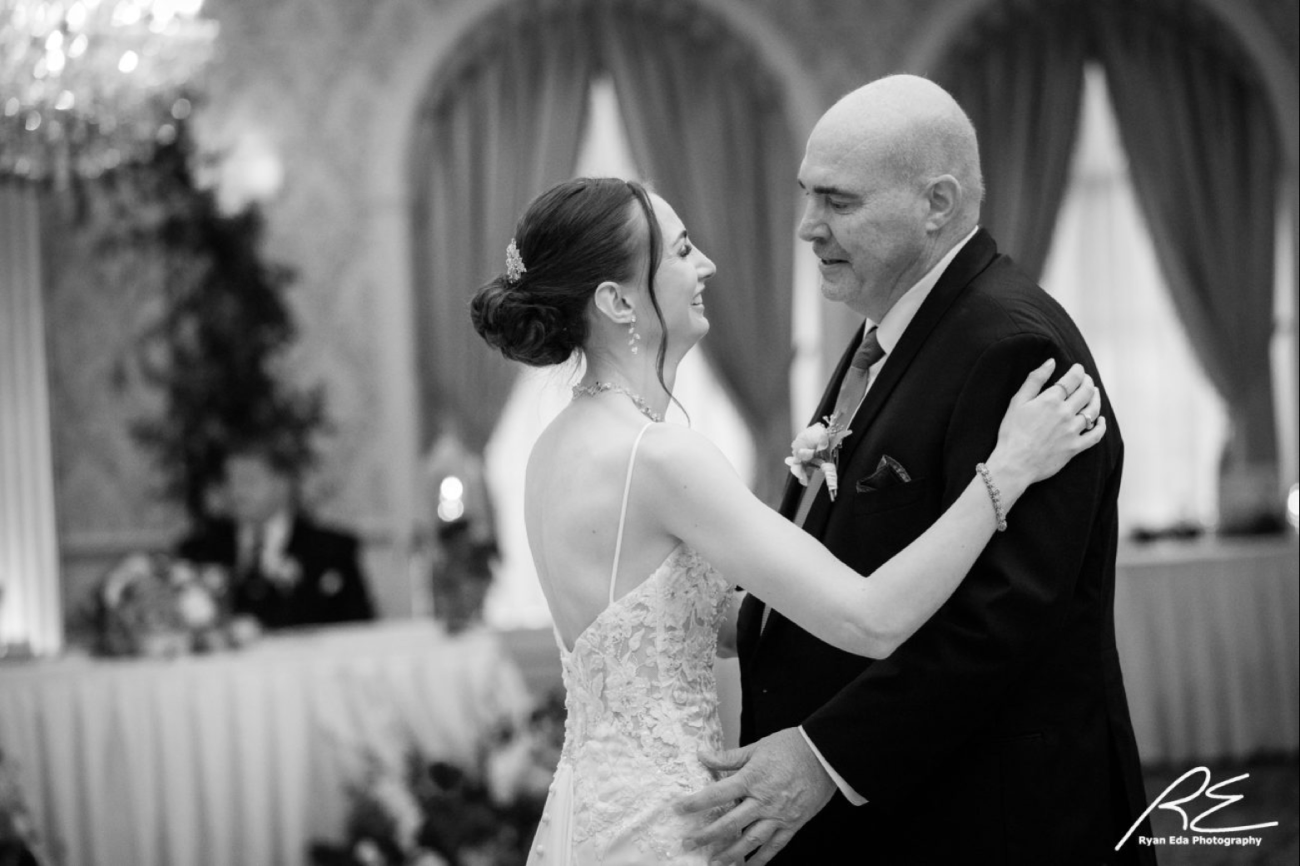
A reception dance at The Merion. Photo: Ryan Eda Photography
A few quick guided moments still help here, like a sunset portrait break or a photo with a group of friends. They take minutes, and you get right back to the party.
How Gentle Direction Helps Create Natural Wedding Portraits
Gentle direction is how posed photos end up looking candid. Instead of stiff poses, your photographer gives simple prompts and lets your real expressions do the rest.
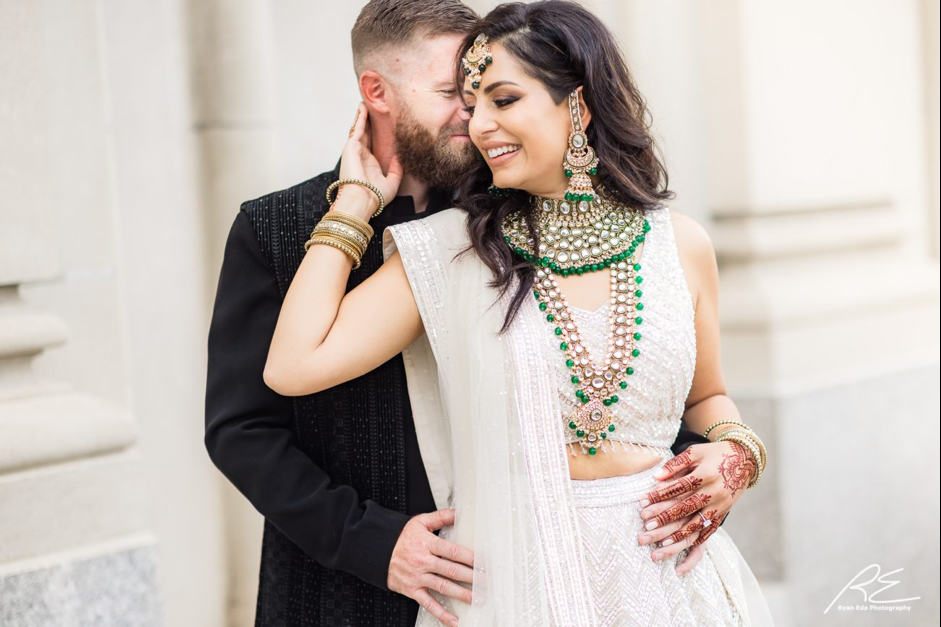
A guided portrait with a natural moment at Hotel du Pont. Photo: Ryan Eda Photography
What that looks like in practice:
- Simple movements instead of stiff poses. Walk together, lean in, turn toward each other.
- Natural interaction. Talk, laugh, and react to each other. The camera catches what happens.
- Light and composition, adjusted quietly. Your photographer moves you into flattering light without breaking the moment.
Light matters even more in Philadelphia. Many of our venues are historic ballrooms and former banks with dramatic but dim interiors, so we plan where you’ll stand before the portraits start.
You don’t need modeling experience to look great in your wedding photos. If you’re nervous, an engagement session is a low-pressure way to practice. Ryan recommends one whenever possible, because a working relationship before the wedding helps you relax on camera.
Why a Boutique Photography Experience Makes the Difference
A boutique experience makes the balance personal. You work directly with Ryan, who learns your preferences and adapts the coverage to your personality, not a standard checklist. For how this compares with a high-volume studio, see boutique vs. traditional wedding photography.
That starts with conversation. At your Philadelphia wedding photography consultation, Ryan asks about your plans and also your story, so he knows which moments and relationships matter most.
Couples notice the planning. In reviews on The Knot, Emily H. describes a photo plan mapped out “down to the time.” Amy T. says Ryan spoke with her event coordinators to ease timeline worries. And with on-and-off rain on her wedding day, Megan R. says he had already picked both indoor and outdoor spots.
What Should Couples Discuss With Their Wedding Photographer?
Before your wedding, talk through four things with your photographer, so the candid and posed parts of your day fit together smoothly.
- The balance you want. Do you lean toward candid, toward guided portraits, or an even mix? Share a few photos you love and why.
- Important family groupings. List the must-have family and wedding-party photos, including the people who are hard to round up.
- Your timeline and portrait locations. Plan portrait time and travel between locations. Our wedding photography shot list can help you build the list.
- Styles you like and dislike. If you hate a certain pose or editing look, say so early.
For more ideas, see our questions to ask a Philadelphia wedding photographer.
Frequently Asked Questions
Can wedding photos look natural even when they are posed?
Yes. The secret is gentle direction instead of stiff posing. Your photographer places you in good light, gives simple prompts like walking or leaning in, and captures the real expressions that happen in between. The result looks natural even though the setting and composition were planned. An engagement session beforehand makes it even easier.
What percentage of wedding photos should be candid?
There’s no fixed rule. The right mix depends on your timeline, the size of your family photo list, and how comfortable you are being guided. Most of the day, including the ceremony and reception, is naturally candid, while portrait time is guided. Tell your photographer what matters most, and they’ll plan the balance around it.
How do photographers capture spontaneous wedding moments?
Photographers capture spontaneous moments by anticipating them. They know when emotional moments are likely to happen, such as the vows, the first look, or the toasts, and position themselves early. They stay unobtrusive, so guests act naturally, and they watch the people around the couple, not just the couple, for reactions.
Can shy couples feel comfortable during wedding portraits?
Yes. Shy couples often do best with simple, guided movements and a photographer who keeps things relaxed. You don’t need modeling experience. An engagement session is a great low-pressure way to practice, and a good photographer will give clear direction so you’re never left wondering what to do.
Why is combining candid and posed photography beneficial?
Combining both gives you a complete story: real emotion from the candid moments, plus polished portraits of the two of you and your families. You get variety for albums, prints, and sharing, and you don’t miss either the honest reactions or the classic photos your family will treasure for generations.
Experience Personalized Boutique Wedding Photography With Ryan Eda Photography
At Ryan Eda Photography, your wedding is told through natural storytelling and beautifully guided portraits, balanced around what matters to you. We photograph weddings throughout Philadelphia, South Jersey, and Wilmington, DE, and your edited gallery typically arrives in about two to three weeks.
Read what couples say in our testimonials, then fill out our inquiry form to tell us about your wedding and schedule your consultation.